When people first start checking halal status on packaged products, they often expect cosmetics to be easier than food. The label is there, the ingredient list is there, and in theory that should be enough. In practice, cosmetic labels can be more confusing than food labels because the ingredient names are more technical, the sourcing is less obvious, and one vague line can hide a lot of uncertainty.
In the United States, the FDA generally expects retail cosmetics to list ingredients by their common or usual names. That sounds helpful, and it is better than having no list at all. But a compliant label is not the same thing as a fully transparent one. A name on the package may tell you what the substance is called, while still leaving open where it came from, how it was processed, or whether the manufacturer used a simplified label term.
That is why a cosmetic product can feel easier to scan at a glance and harder to evaluate with confidence. Food labels often point to ingredients people already recognize from cooking. Cosmetic labels, by contrast, are built for formulation and regulation. They often use chemical or industry names, and one of the biggest uncertainty traps is a single word such as fragrance, parfum, or a compound that could be plant-based, animal-derived, or synthetic depending on the supplier.
For halal-conscious consumers, that gap matters. If you are trying to avoid haram ingredients and also avoid overclaiming certainty where the label does not give it, you need a more careful way to read the list. The goal is not to issue a ruling from the package alone. The goal is to understand what the label tells you, what it does not tell you, and when an ingredient should be treated as mushbooh, or uncertain.
Why Cosmetic Labels Feel Harder Than Food Labels
Food labels and cosmetic labels are both ingredient lists, but they are written for different purposes. Food labels are usually trying to tell you what you are about to eat. Cosmetic labels are trying to tell you what is in a formulation, often using names that make sense to chemists, regulators, and manufacturers more than ordinary shoppers.
That difference shows up immediately. Food ingredients are often grouped into everyday categories such as sugar, flour, oil, flavoring, and gelatin. Cosmetic ingredients are more likely to appear as glycerin, stearic acid, cetyl alcohol, sorbitan olivate, ceteareth compounds, or botanical extracts with Latin names. Some of those ingredients may be fine, but the label alone does not tell you whether the raw material came from plants, animals, or synthetic production.
Another reason cosmetic labels are harder is that the source of an ingredient often matters as much as the ingredient name itself. Glycerin can be plant-derived, animal-derived, or synthetic. Stearic acid can come from vegetable oils or animal fats. Collagen and keratin may be clearly animal-related, but even then the real question becomes which animal, what processing was used, and whether the supply chain is transparent enough for you to assess it responsibly.
Fragrance adds another layer of difficulty. The FDA notes that fragrance components may be listed simply as fragrance, which means the label can legally give you less detail than you might expect. That is a practical problem for consumers who want to check individual ingredients. A product can appear straightforward on the surface while still leaving the most relevant detail out of view. When that happens, the right next step is often to contact the manufacturer rather than guess.
The Fragrance Problem in Plain Language
Fragrance is one of the clearest examples of why cosmetic labels can be less transparent than food labels. On a snack package, a vague ingredient may still be one among many clearly named components. On a cosmetic package, fragrance can function like a catch-all term that hides a blend of materials, solvents, and carriers. That is not automatically a problem, but it does mean the label may not be enough for someone trying to make a halal-conscious decision.
If a product depends on fragrance, parfum, or an aroma blend for its performance or appeal, the single word on the label may not tell you whether any part of it comes from an animal source or uses alcohol in a way you want to avoid. A conservative approach is to treat that uncertainty as real uncertainty, not as a reason to assume the best or the worst.
What Makes an Ingredient Mushbooh
Mushbooh is often translated as doubtful or uncertain. In practical terms, it means the ingredient name does not give you enough information to confidently classify it as halal or haram from the label alone. That does not mean the ingredient is bad. It means the label leaves a gap that deserves more checking.
This is where cosmetic products often become more difficult than food. The label may show you a familiar name, but the real question is still hidden underneath: Where did it come from? Was it processed with animal-derived inputs? Was alcohol used in a way that matters for your standards? Was it made in a facility where the ingredient source is not transparent? If the answer is not on the label, then the label itself is not enough.
IFANCA shopper guidance is useful here because it emphasizes a basic reality of modern manufacturing: one ingredient name can hide a complex supply chain. The recommendation is not to panic. It is to check ingredient sources carefully and, when possible, prefer authentic certified halal products. That is a sensible standard for cosmetics too. Certification cannot solve every question, but it can reduce the amount of guessing you have to do.
In everyday terms, an ingredient is mushbooh when one or more of these things apply:
- The label names the ingredient but not its source.
- The ingredient could be plant-derived or animal-derived.
- The ingredient may be processed with alcohol, enzymes, or other inputs that are not visible on the package.
- The product uses a broad label term such as fragrance or perfume that hides detail.
- You cannot find a trustworthy source explaining how the ingredient is made.
That is why mushbooh should be treated as a category for caution, not as a final judgment. It is the label equivalent of saying, I need more information before I can be comfortable with this.
A Plain-Language Way to Think About It
If halal and haram are the two clear ends of the spectrum, mushbooh is the middle zone where the label does not give enough evidence to move confidently in either direction. That middle zone is common in cosmetics because formulas are built from raw materials with variable origins. Reading the label is still useful, but the label is only the start of the check, not the end of it.
How to Check Uncertain Ingredients More Confidently
When a cosmetic ingredient looks uncertain, the safest practical approach is to slow down and check the ingredient family, not just the word printed on the package. A strong label-reading routine does not depend on guessing. It depends on collecting enough information to make a careful decision.
A Conservative Checklist
- Read the full ingredient list, not only the front claims. Marketing words such as clean, gentle, natural, or vegan do not tell you whether every ingredient source is clear.
- Look up the ingredient family. If the label says glycerin, stearic acid, collagen, lanolin, squalene, or keratin, remember that the source can vary. The name alone does not settle the question.
- Check the fragrance line separately. If the product lists fragrance, parfum, or a similar umbrella term, treat that as incomplete information and look for further clarification if the product matters to you.
- Ask the manufacturer when the source matters. A brief message asking whether an ingredient is plant-derived, animal-derived, or synthetic is often more useful than hours of guesswork.
- Prefer certified products when the category is important. If you use a product every day, or if the ingredient source is consistently unclear across brands, certification can save time and reduce uncertainty.
- Keep a personal note on products you trust. Once you verify a product, save the result so you do not repeat the same research every time.
This is also where a simple labeling habit can save you from overreacting. Some ingredients are fully acceptable once you know their source. Others remain questionable because the source is not documented clearly enough. The point is not to fear every technical name. The point is to know which names deserve a follow-up.
When you start using this approach, the problem becomes more manageable. You stop treating every unfamiliar word as a crisis, and you stop treating every familiar word as automatically safe. That is a more honest way to read cosmetic labels.
Why Food-Label Habits Do Not Transfer Cleanly
Many people begin with food because it feels simpler. If a snack has obvious non-halal ingredients, the problem is visible. Cosmetics are different because the product can perform well even when the ingredient source is opaque. A moisturizer can work, a lipstick can look fine, a shampoo can smell pleasant, and none of that tells you whether the source of the ingredients matches your standard.
There is also a psychological difference. With food, the final use is obvious. With cosmetics, people sometimes assume that if the ingredient is not being eaten, the source matters less. For many halal-conscious consumers, that is not a safe assumption. The source still matters, and the manufacturing path still matters, especially when you are trying to act carefully rather than casually.
So the right mindset is not to copy food-label habits and hope they fit. It is to accept that cosmetic labels need a slightly different workflow: read more carefully, check source more often, and treat vague terms as a prompt for verification instead of a prompt for confidence.
How Halal Lens Can Help
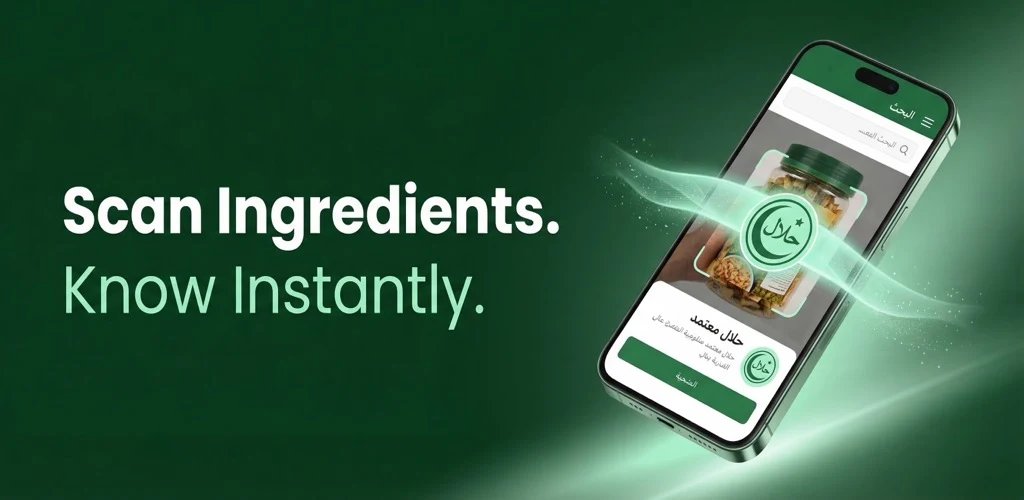
That workflow is exactly the kind of problem Halal Lens is built for. It scans ingredient text directly, so you do not need a barcode to start checking a product. It can classify ingredients as halal, haram, or mushbooh, and it includes both food and cosmetics modes so the same app can support different shopping situations.
It also adds practical tools that matter once you begin checking products regularly: AI chat for follow-up questions, history and export for tracking what you have already reviewed, and reminders that help you stay consistent. If you want a single place to keep your checks organized instead of redoing the same research every week, that kind of workflow can save a lot of time.
For a practical starting point, you can try Halal Lens and see whether its label scanning fits your routine. The useful part is not that it replaces your judgment. The useful part is that it gives you a structured way to handle uncertainty without forcing a guess.
A Practical and Conservative Way Forward
Cosmetic label reading is harder than food label reading for a simple reason: the package often tells you the ingredient name without telling you enough about the source. That gap is where confusion grows. It is also where careful checking matters most.
The conservative approach is straightforward. Read the full list. Treat fragrance and other umbrella terms as incomplete. Recognize mushbooh as a real category of uncertainty, not a loophole. Ask questions when the source matters. Prefer certified halal products when you can. And when you need help organizing the process, use a tool that is built for ingredient text rather than barcode luck.
That way, you are not pretending the label gives you more certainty than it does. You are using the label as a starting point, then checking the unclear parts with a method that is calm, practical, and honest.