When the Envelope Arrives
For many tenants, the first reaction to a German heating cost statement is not curiosity. It is a small wave of panic. The number at the bottom looks large, the word Nachzahlung feels heavier than it should, and the document itself seems designed to make you doubt your own judgment. If you are an expat, that reaction can be even stronger because the terminology is unfamiliar and the stakes are real.
The good news is that a large bill is not the same thing as a wrong bill. Heating costs can rise for ordinary reasons: energy prices, colder weather, a changed distribution key, or a building that used more heat than last year. The goal of a first review is not to decide whether the landlord is right or wrong. The goal is to decide whether the statement is plausible enough to pay attention to, or suspicious enough to slow down and ask questions.
This article is built for that first, practical pass. It shows you how to check a German heating cost statement before you panic, where to look for unusual items, when to compare year over year, and how to use a simple tool like NeiboCheck to keep the process organized. NeiboCheck is a guidance tool for tenants and expats, not legal advice. Its subtitle says it plainly: Check your utility bill. Keep an eye on unusual costs and deadlines.
Start With the Billing Period, Not the Total
The first thing to verify is the billing period. A surprising number of disputes begin because the reader looks only at the final number and skips the date range entirely. That is risky. A statement can only make sense if you know exactly which months it covers. If the period is wrong, incomplete, or inconsistent with the apartment handover date, everything else becomes harder to trust.
Write down three facts before you react to the balance:
- The start and end date of the billing period.
- The date the statement was issued or delivered.
- Whether the heating and hot water costs are shown separately or bundled together.
Then compare that period with your own timeline. Did you move in midway through the year? Did you move out before the end of the period? Was there a meter reading when you received the keys, or when you returned them? A clean billing period is the foundation of a sane review. Without it, even a reasonable-looking statement can be misleading.
What the Statement Should Show
A heating cost statement usually includes the total building cost, the distribution key, your share, your prepayments, and the final balance. If it is hard to understand what the numbers represent, pause before trying to calculate the entire document in your head. Break it into pieces. Ask first: what was spent, how was it split, and what part belongs to me?
That is also why manual entry matters. If you enter each cost item yourself instead of trusting a single summary number, you are more likely to notice when a line looks out of place.
What Usually Moves the Number
Not every larger-than-expected heating bill is a red flag. Some increases are boring, predictable, and real. That matters because you want to focus your attention where it is useful, not where it is emotional.
Common reasons for a higher settlement include:
- Energy price increases: Fuel and district heating prices can move sharply from one year to the next.
- Weather: A colder winter means more consumption, especially in buildings with old insulation.
- Occupancy changes: More people in the apartment or in the building can change consumption patterns and distribution.
- Distribution changes: If the building uses a different allocation key, your share can change even if total consumption stayed similar.
- Underestimated prepayments: If monthly advances were set too low, the annual balance can still look unpleasant even when the statement itself is correct.
These explanations are not excuses for sloppy documentation. They are just the normal range of causes you should keep in mind before assuming an error. If the bill is higher than last year, the question is not simply is it high? The real question is is it high for a reason that the statement explains?
Compare With Last Year, Not With Your Fear
A year-on-year comparison is one of the fastest ways to judge whether a heating statement deserves more attention. Compare the total, the per-square-meter cost, and any major line items. If one year looks normal and the next year suddenly doubles, that is worth a second look. If the increase is modest and the explanation is visible in the statement, you may simply be seeing a normal market change.
Many tenants like to keep a rough cost guide for this reason. You do not need a perfect benchmark to benefit from comparison. Even a simple personal history of your own statements can show whether the current number is in the same neighborhood as previous years.
Red Flags Worth a Second Look
Once you have the period and the year-over-year picture, look for specific patterns that often deserve clarification. One suspicious item does not prove a problem. Several suspicious items together usually justify a deeper review.
- The period does not match your tenancy dates.
- The statement uses estimates where actual readings should exist.
- The same cost appears twice under different labels.
- Hot water and heating are bundled in a way that is not explained.
- The allocation key changed without a clear reason.
- There are new service or administrative items that nobody explained to you.
- The amount for common-area heat seems unusually high compared with the size of the building.
If you see one of these, do not jump straight to accusations. First ask for clarification. The purpose of a first review is to separate a normal increase from a documentation problem. A calm question is often more productive than a fast conclusion.
Watch the Unusual Charges
This is where a structured review helps most. If a line item is much larger than last year, or if it appears for the first time without explanation, mark it. If a charge does not obviously belong in a heating statement, mark it. If the wording is vague, mark it. The goal is not to be suspicious about everything. The goal is to find the one or two lines that deserve real attention.
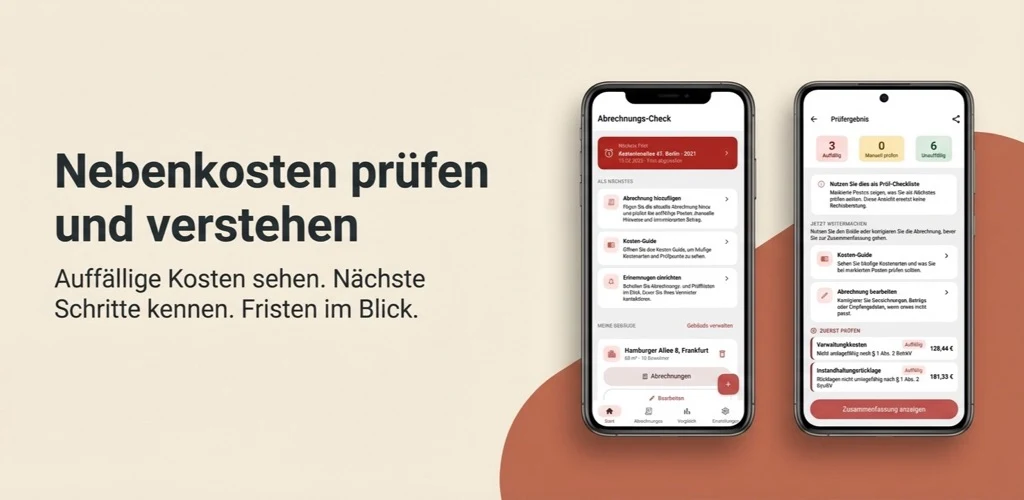
That kind of highlighting is exactly what NeiboCheck is designed to support. You can enter cost items manually, compare them year over year, see unusual charges stand out, and keep deadline reminders in one place. If you prefer to review bills slowly and carefully rather than all at once, that structure can make the process much less stressful.
Ask for Documents Before You Argue
If the statement still does not make sense after your first pass, ask for document inspection before you argue over the total. According to Verbraucherzentrale, heating cost statements are often faulty or at least need clarification, and tenants should check the billing period carefully. The same guidance also notes that tenants can request document inspection. If needed, they may propose at least two appointment options and set a 14-day deadline for confirmation.
That matters because the paper summary is only part of the picture. Invoices, meter readings, distribution keys, and service contracts often explain why a number is high, or why it should not have been charged in the first place. You do not need to solve the whole case in your head before asking to see the underlying documents.
When you request clarification, keep it narrow and practical. Ask which invoice supports the charge, how the distribution key was applied, and whether the billing period matches the actual consumption period. If the response is slow, note the date, keep your copies, and stay organized.
A Simple 30-Minute Workflow
If you feel overwhelmed, use a short workflow instead of trying to read the document all at once:
- Read the billing period and delivery date first.
- Compare the total with last year and with your own monthly prepayments.
- Scan for unusual line items, duplicates, or vague labels.
- Check whether heating and hot water are split or bundled in a clear way.
- Enter the numbers manually into a review tool or spreadsheet so you can spot the outliers.
- Request document inspection if anything still looks off.
This approach keeps the review factual. It also reduces the chance that you will miss a deadline because you spent too long reacting emotionally to the final balance.
Where NeiboCheck Fits In
NeiboCheck is useful when you want help organizing the review without handing the whole process over to an app. The app is built for manual entry, so you can type in the amounts from your statement yourself. That is important because a heating cost review often depends on small details, not one giant summary number. Once the data is in, unusual charges are easier to see, year-over-year comparison becomes straightforward, and deadline reminders keep the follow-up from slipping through the cracks.
It also includes a practical cost guide, which helps you judge whether a line item looks ordinary or unusual. That does not replace a legal review. It simply gives you a better first pass, especially if you are new to German renting and do not have a mental benchmark for what heating costs are supposed to look like.
For a closer look at the app, you can find it here: NeiboCheck.
If the Number Still Does Not Make Sense
If you finish the first review and the statement still feels wrong, slow down. Do not assume the worst, but do not ignore the feeling either. A large Nachzahlung can be caused by real costs, yet it can also hide a simple accounting problem that becomes obvious once you compare dates, readings, and invoices carefully.
The practical next step is to ask for clarification in writing, keep a copy of everything you send, and set yourself a reminder for the follow-up date. If the answer explains the cost, you can move on. If it does not, you will already have the notes you need for the next conversation, whether that is with the landlord, a tenant association, or a legal adviser.
The advantage of a calm process is that it keeps your options open. You are not agreeing with the statement just because you looked at it. You are simply collecting the facts in a way that makes the next decision easier.
Disclaimer
This article is a practical review guide, not legal advice. NeiboCheck and this post are meant to help you organize a heating cost review, compare numbers, and track deadlines. They do not replace a lawyer, a tenant association, or formal legal advice when you need it.